


01 Dec, 2025
The Journey from Anatomy to Diagnosis through Santosh Institutes D.X-RAY Program

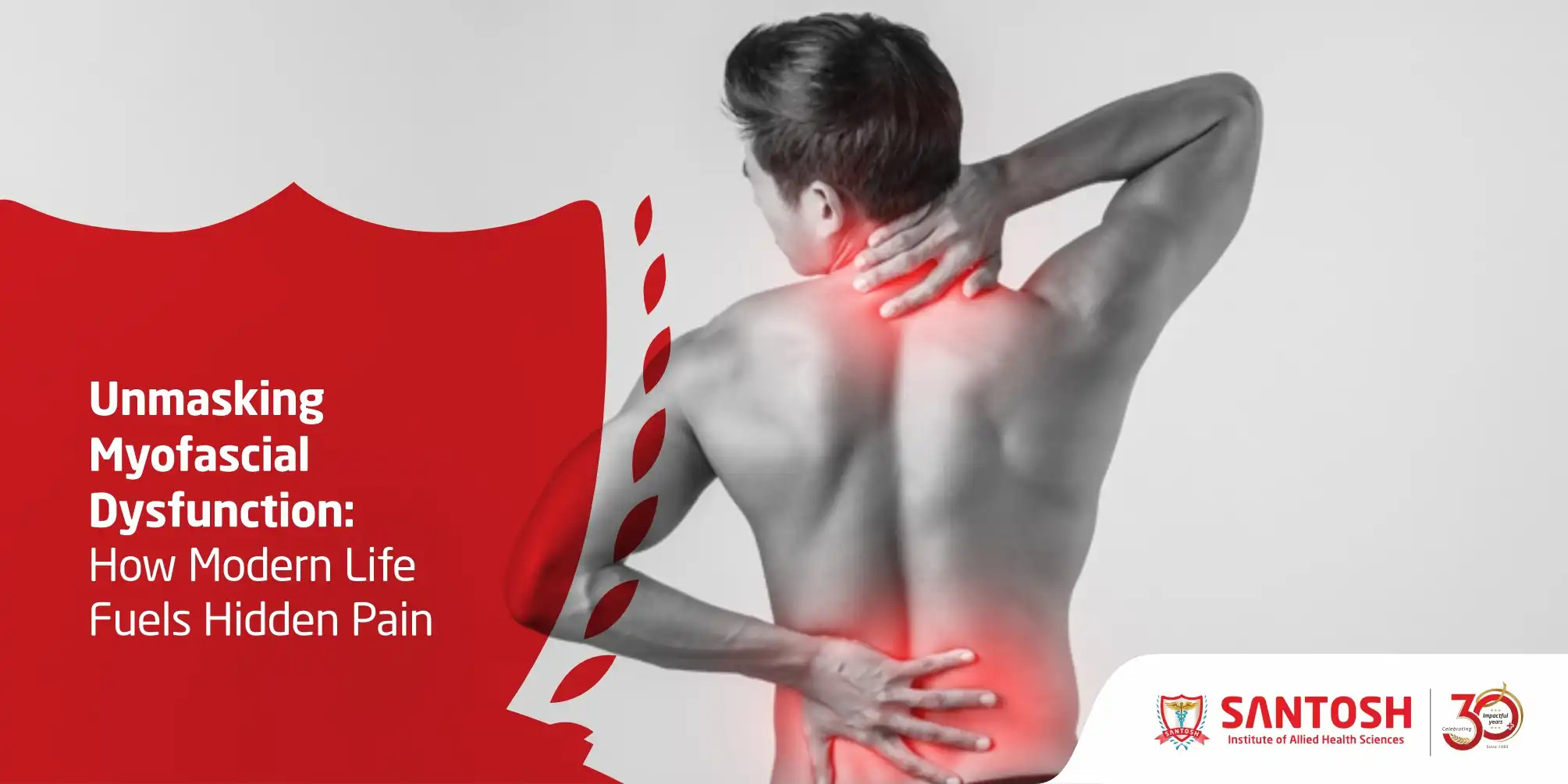
Unmasking Myofascial Dysfunction: How Modern Life Fuels Hidden Pain
Home
Unmasking Myofascial Dysfunction: How Modern Life Fuels Hidden Pain
In today’s fast-paced, screen-dominated world, many of us are unknowingly dealing with myofascial dysfunction a condition often overlooked but increasingly common. Myofascial dysfunction refers to pain and stiffness caused by tight muscles and fascia, the connective tissue that surrounds and supports our muscles. While most people associate body aches with aging or injury, modern lifestyle habits are emerging as the primary culprits behind this silent discomfort. At Santosh Institute of Allied Health Sciences, we aim to highlight the causes, symptoms and simple preventive strategies for myofascial dysfunction, empowering individuals to maintain mobility, flexibility, and overall well-being.
Why Myofascial Dysfunction Is More Common Today
Several lifestyle factors have contributed to the rising prevalence of myofascial dysfunction:
- Prolonged Sitting: Hours spent at desks or in front of computers can tighten hip flexors and weaken core muscles, disrupting the balance of the musculoskeletal system.
- “Tech Neck”: Constantly looking down at smartphones or tablets strains the fascia in the neck and shoulders, leading to pain and tension.
- Stress: Psychological stress triggers muscle tightness and the formation of trigger points: small, painful knots in the muscles that can radiate discomfort across the body.
- Lack of Movement: A sedentary lifestyle causes fascia to become stiff, dehydrated, and less elastic, reducing overall mobility and increasing the risk of injury.
These factors combined create a perfect storm for chronic discomfort, limiting both physical and mental performance. At Santosh Institute of Allied Health Sciences, we emphasize the importance of recognizing these early warning signs to prevent long-term complications.
Common Symptoms of Myofascial Dysfunction
Recognizing myofascial dysfunction is the first step toward effective management. Common symptoms include:
- Persistent neck and back pain
- Muscle tightness and stiffness
- Headaches, often tension-related
- Poor posture or slouching
- Fatigue or low energy due to ongoing discomfort
While these symptoms may seem minor at first, they can gradually worsen if left unaddressed. Early intervention, including lifestyle modifications and therapeutic exercises, can significantly improve quality of life.
Simple Ways to Prevent Myofascial Dysfunction
Preventing myofascial dysfunction doesn’t require complex routines or expensive equipment. Incorporating small, consistent habits into daily life can make a significant difference:
- Take Movement Breaks Every Hour: Stand up, stretch or walk briefly to reduce stiffness and improve circulation.
- Stretch Daily: Focus on your neck, shoulders, hips, and lower back to maintain flexibility and relieve tension.
- Self-Myofascial Release: Tools such as foam rollers or massage balls can help release tight fascia and improve muscle elasticity.
- Maintain Neutral Posture: Keep your spine aligned while using screens to prevent excessive strain on neck and shoulder muscles.
- Stay Hydrated and Manage Stress: Proper hydration keeps fascia supple, while stress management through breathing exercises, meditation, or yoga reduces muscle tension.
At Santosh Institute of Allied Health Sciences, we believe that the fascia thrives on movement, hydration, and relaxation. Integrating these principles into daily life not only prevents pain but also enhances overall functional mobility.
Moving Forward: Small Habits, Big Impact
The hidden pain of modern life does not have to be inevitable. By adopting small, conscious habits every day, individuals can protect their fascia, maintain flexibility, and prevent chronic discomfort. The key is consistency moving regularly, managing stress, and listening to the body’s signals.
Remember: your body is designed to move. Neglecting it can lead to stiffness, pain, and reduced quality of life. On the other hand, mindful movement, proper posture, and stress management can keep your fascia healthy and your muscles resilient.
At Santosh Institute of Allied Health Sciences, we encourage everyone to prioritize their musculoskeletal health. Small adjustments in daily routines can prevent myofascial dysfunction and support long-term well-being.
Recent News

01 Dec, 2025
Is Optometry a good Career Option?
01 Dec, 2025
The Science of Life-A Journey into M.Sc. Physiology
01 Dec, 2025
Diploma in Dental Hygienist Course
01 Dec, 2025
How M.Sc Medical Anatomy Can Enhance Your Career
01 Dec, 2025
Insights of M.Sc Medical Microbiology Programme
01 Dec, 2025
BPT Career Prospects, Specializations and Benefits
01 Dec, 2025
Unlocking the potential of BOMM course
01 Dec, 2025
Importance of good nutrition for overall health
01 Dec, 2025
Get Admission in BMLS Does not Have To Be Hard
01 Dec, 2025
All You Need to Know About Paramedical Courses
01 Dec, 2025
What is MPT Neurology and Its Benefits
01 Dec, 2025
M.Sc. Medical Physiology
01 Dec, 2025
Courses offered at Santosh Group of Institutes
01 Dec, 2025
Is BOT a Good Career in 2026–27?
01 Dec, 2025
Is MPT Worth It?
01 Dec, 2025
Is BPT a Good Career in 2026–27
01 Dec, 2025
M.Sc. Medical Biochemistry Teaches You to Read It
01 Dec, 2025
Is M.Sc. Forensic Science Your Next Move?
01 Dec, 2025
Everything you need to know about Optometry Courses
01 Dec, 2025
Is the MMLS Your Next Step?


01 Dec, 2025
Reasons for M.Sc. Clinical Psychology in high demand

01 Dec, 2025
Career Opportunities after BMLS course








01 Dec, 2025
NURSING AS A CAREER FOR YOUR BRIGHT FUTURE





01 Dec, 2025
The Hidden Facts About the Brain After a Stroke









01 Dec, 2025
Top 10 Benefits of Attending a Paramedical College










Never miss an update - Subscribe to our newsletter for admission alerts, program updates, and campus news—straight to your inbox.